
BMX Bike Sizing Guide (2026) — Race & Freestyle Size Charts
Quick Answer
Most riders 4′10″–6′4″ (147–193cm) use a 20″ wheel BMX. Younger riders fit 16–18″ wheels. For race vs. freestyle, use the charts below for toptube, crank, and cockpit starting points.
While we specialize in e-bike law and regulation, we maintain these sizing resources as a reference for riders. BMX sizing is highly personal—experienced riders often deviate significantly from standard charts based on riding style and preference.
For precise BMX fitting—especially for competitive racing or if you’re between sizes—we recommend visiting a local BMX shop or consulting with experienced riders at your track.
Information synthesized from manufacturer sizing guides, UCI regulations, and industry standards. Last reviewed:How Are BMX Bikes Sized?
BMX frames are far more standardized than road or mountain bikes—wheel size and toptube length do most of the fit work. Full-size BMX uses a 20″ wheel; 16″ and 18″ options fit younger riders. Use the universal chart to pick a wheel size, then refine toptube, stem, and crank length with the race or freestyle tables below.
Unlike other cycling disciplines where frame size varies dramatically, BMX sizing centers on matching your height to the appropriate toptube length within your chosen wheel size. A quarter-inch difference in toptube can significantly change how a bike handles.
BMX Race vs. Freestyle: Key Differences
🏁 BMX Racing
Purpose: High-speed competition on dirt tracks with jumps, berms, and straights. Geometry: Longer toptube for stability at speed, taller riding position, single gear optimized for acceleration. Features: Lightweight alloy or carbon frame, larger chainring gearing (41-44T), clipless pedals common at competitive levels.
🎪 BMX Freestyle
Purpose: Tricks, stunts, and street/park/dirt riding. Geometry: Shorter toptube for quick maneuvers, lower center of gravity, stronger frame construction. Features: Reinforced chromoly frame, lower gearing (25/9 micro-drive), platform pedals, often includes pegs for grinds.
Both disciplines use 20″ wheels for adult riders, but the frame geometry and components differ significantly. Choose race geometry for track competition, freestyle for tricks and casual riding. Many modern “street” BMX bikes blur these lines with versatile geometry.
BMX Size Chart (Height → Wheel)
| Rider Height | Centimeters | Approx. Age | Wheel Size |
|---|---|---|---|
| 3′7″ – 4′0″ | 110 – 122cm | 5 – 7 yrs | 16″ |
| 4′0″ – 4′10″ | 122 – 147cm | 7 – 11 yrs | 18″ |
| 4′10″ – 6′4″ | 147 – 193cm | 11+ yrs | 20″ |
Use this as a starting point. Once you’ve identified the right wheel size, use the Race or Freestyle tables below to dial in toptube length and cockpit setup.
BMX Race Sizing Guide (Toptube • Cockpit • Cranks)
| Rider Height | Frame | Toptube | Stem | Bar Rise | Bar Width | Cranks | Gearing |
|---|---|---|---|---|---|---|---|
| 4′4″ & under | Micro | 15″–16.5″ | 25–35mm | 2″–2.5″ | 20″–22.5″ | 145–155mm | 41–43 / 16 |
| 4′2″ – 4′10″ | Mini | 16″–17.5″ | 30–40mm | 2″–3.5″ | 21″–23.5″ | 155–165mm | 41–43 / 16 |
| 4′6″ – 5′1″ | Junior | 17″–18.5″ | 40–45mm | 3″–5″ | 22″–25″ | 160–175mm | 42–43 / 16 |
| 5′0″ – 5′4″ | Expert | 18.5″–19.5″ | 43–48mm | 5″–7″ | 25.5″–27″ | 170–175mm | 42–43 / 16 |
| 5′2″ – 5′6″ | Expert XL | 19.5″–20″ | 43–48mm | 6″–7″ | 25.5″–27″ | 170–175mm | 42–43 / 16 |
| 5′3″ – 5′8″ | Pro | 20″–20.5″ | 50–55mm | 7″–8″ | 27″–28″ | 175–180mm | 43–44 / 16 |
| 5′7″ – 6′0″ | Pro XL | 20.5″–21.25″ | 50–55mm | 8″+ | 28″ | 180–190mm | 44 / 16+ |
| 6′0″ + | Pro XXL | 21.25″–22″ | 52–60mm | 8″+ | 28″ | 180–190mm | 44 / 16+ |
Note: Frame size names (Micro, Mini, Expert, Pro, etc.) refer to fit—not skill level. “Expert” and “Pro” are sizing categories used across all BMX manufacturers.
BMX Freestyle Sizing Guide (Wheel • Toptube)
| Rider Height | Wheel | Toptube |
|---|---|---|
| 2′4″ – 3′0″ | 12″ | 12″ – 13″ |
| 2′8″ – 3′6″ | 14″ | 14″ – 14.5″ |
| 3′2″ – 4′0″ | 16″ | 16″ – 16.5″ |
| 3′10″ – 4′8″ | 18″ | 18″ – 18.5″ |
| 4′8″ – 5′2″ | 20″ | 18.5″ – 20″ |
| 5′0″ – 5′4″ | 20″ | 20″ |
| 5′2″ – 5′6″ | 20″ | 20.25″ |
| 5′4″ – 5′8″ | 20″ | 20.5″ |
| 5′6″ – 6′0″ | 20″ | 20.75″ |
| 5′8″ – 6′2″ | 20″ | 21″ |
| 6′0″ + | 20″ | 21.25″+ |
Freestyle fit leans heavily on preference: shorter toptube = quicker spins and manuals; longer = more stability on big transitions and at speed.
🤔 Between Sizes? Here’s How to Decide
If you’re between race frame sizes, go with the larger option. Race tracks reward stability at speed, and a slightly longer toptube helps maintain control through berms and over jumps.
For street riding focused on technical tricks (barspins, tailwhips, 180s), a shorter toptube makes the bike more responsive and easier to spin. Many pros ride frames shorter than standard charts suggest.
If you spend most time on ramps, bowls, and transitions, a longer toptube provides better stability when riding fast and landing from height.
BMX sizing is extremely personal. Borrow bikes from friends at the park or track, and ride each size over multiple sessions before buying. What feels right matters more than charts.
Common BMX Sizing Mistakes
- ❌ Treating charts as absolute: BMX sizing is more personal than any other cycling discipline. Charts are starting points—experienced riders often go 0.25″–0.5″ longer than recommended.
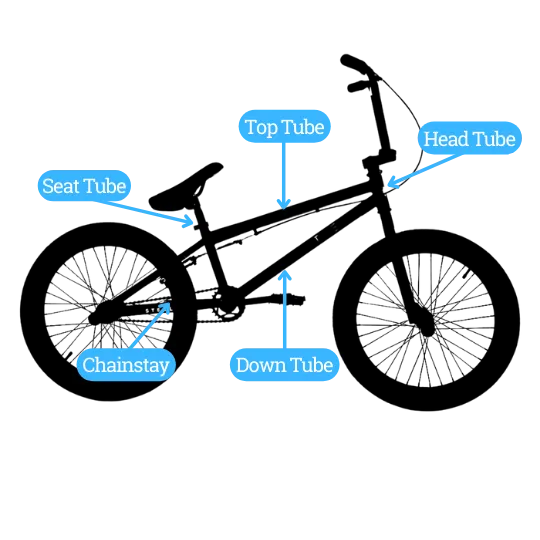
- ❌ Ignoring chainstay length: A longer toptube with short chainstays feels very different than the same toptube with long chainstays. Consider overall geometry, not just TT.
- ❌ Sizing up too much for growth: Kids on oversized BMX bikes struggle to control them. It’s safer and more fun to ride a properly-sized bike now and upgrade later.
- ❌ Forgetting cockpit adjustments: Stem length and bar rise dramatically affect fit. You can tune a bike that’s slightly off with different bars or a longer/shorter stem.
Race Geometry vs. Freestyle Geometry Explained
Race geometry prioritizes speed and stability with longer toptubes (typically 20.5″–21.25″ for adults), taller bar rise, and steeper head tube angles. This creates a stretched-out position ideal for pedaling efficiency and high-speed control on tracks.
Freestyle geometry emphasizes maneuverability with shorter toptubes (usually 20″–21″ for adults), lower bar rise, and slacker head tube angles. The compact setup makes spinning, jumping, and technical tricks easier while maintaining strength for impacts.
Chainstay length also differs: race bikes run longer chainstays (around 14″+) for straight-line speed, while freestyle bikes use shorter chainstays (13″ or less) for easier manuals and spins.
Transitioning from Kids’ to Adult BMX
The jump from 18″ to 20″ wheels is significant—it’s not just wheel size but frame geometry, weight, and riding position. Most riders make this transition around age 11-13, but height is more important than age.
Signs It’s Time to Upgrade
- Knees hitting handlebars during pedaling
- Difficulty generating speed or power
- Looking cramped or hunched on the bike
- Expressing interest in more advanced tricks or racing
Easing the Transition
Start with a 20″ bike with a shorter toptube (19.5″–20″) rather than jumping to a full-size 21″ setup. This maintains maneuverability while providing room to grow into the bike. You can always swap to a longer frame later.
Manufacturer Sizing Resources
Each brand has slightly different geometry. Use these official sizing guides for brand-specific recommendations:
Haro Bikes
Pioneers of freestyle BMX with detailed fit tips and T-shirt sizing approach.
Haro Fit Tips →UCI Regulations
International cycling union rules for competitive BMX racing equipment.
UCI Regulations →Frequently Asked Questions
What size BMX bike for a 12-year-old?
Most 12-year-olds ride a 20″ wheel BMX. For freestyle, look for a toptube around 19.5″–20.25″ depending on their height. For racing, an Expert or Expert XL frame typically fits riders in this age range. Height matters more than age—measure your child and use the charts above.
Is toptube length more important than wheel size?
For adult riders, yes. Once you’re on 20″ wheels (the standard adult size), toptube length becomes the primary sizing metric. A 0.25″ difference in toptube length significantly changes how a bike feels and handles. Wheel size mainly determines the overall scale of the bike and is most important when sizing children’s bikes.
Should I size up or down for BMX?
It depends on your riding style. For racing and transition riding where stability matters, size up. For technical street tricks where quick handling is priority, size down. Many experienced freestyle riders intentionally ride frames 0.25″–0.5″ longer than standard charts recommend for better flow and stability.
What’s the difference between race and freestyle BMX sizing?
Race BMX bikes use named sizes (Micro, Mini, Junior, Expert, Pro, Pro XL, Pro XXL) with longer toptubes optimized for speed and stability. Freestyle bikes typically just list toptube length and have shorter frames for better maneuverability. Race bikes also have taller bars, longer stems, and different gearing than freestyle setups.
Can adults ride 20″ BMX bikes?
Yes—20″ is the standard adult BMX wheel size for both racing and freestyle. Professional riders of all heights ride 20″ BMX bikes. For taller adults (6′+), look for frames with 21″+ toptubes, 8″+ bar rise, and consider 22″ or 24″ cruiser BMX bikes for more comfortable geometry.
What do Expert, Pro, and Pro XL mean in BMX sizing?
These are standardized frame size names used across BMX manufacturers—they refer to fit, not skill level. Expert fits riders around 5′0″–5′6″, Pro fits 5′3″–5′8″, and Pro XL fits 5′7″–6′0″. Despite the names, a beginner can ride a “Pro” frame if it’s the right size for their height.
Standards & Reference
For competitive BMX racing, bikes must follow event and governing-body rules. The UCI Cycling Regulations cover geometry and equipment requirements for international competition. USA BMX governs domestic racing with similar standards.
Always compare your selection with the manufacturer’s size guide for your specific model—geometry varies between brands and even between models from the same manufacturer.