
E-Bike Sizing Guide (2026) — Electric Bike Size Charts
Quick Answer
Most riders between 5’6″–5’10″ (168–178cm) fit a 17″–18″ Medium e-bike. If you’re between sizes: smaller = more stand-over & agility; larger = taller stack & roomier cockpit. Always confirm with your brand’s geometry chart.
What Size E-Bike Do I Need?
E-bikes come in three main styles: commuter/urban hybrid, e-mountain (eMTB), and e-road. Each category has distinct geometry and sizing considerations. Use the charts below to find your starting frame size by height, then confirm against the manufacturer’s geometry for your exact model and riding style.
E-Bike Types at a Glance
Commuter / Hybrid
Upright riding position, comfortable geometry. Ideal for city riding, errands, and fitness. Often available in step-through frames.
E-Mountain (eMTB)
Trail-focused geometry with longer wheelbase. Prioritizes stand-over clearance and reach for control on technical terrain.
E-Road
Drop bars with forward-leaning position. Lower front end for aerodynamics. Sized in centimeters like traditional road bikes.
Commuter / Hybrid E-Bike Size Chart
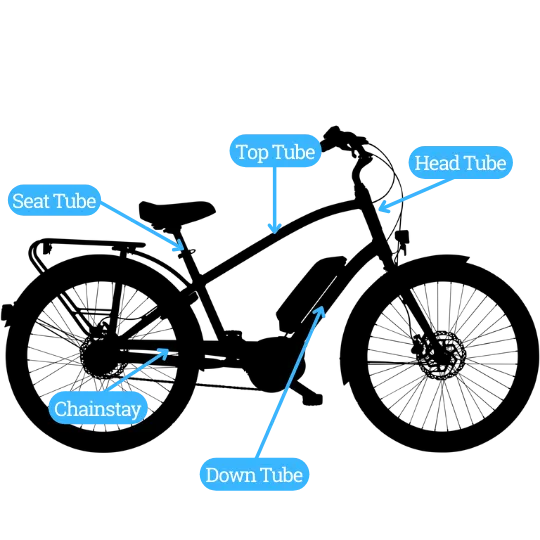
Great for city riding and fitness. Step-through frames improve accessibility; sizing still follows seat-tube length and overall geometry.
| Rider Height | Centimeters | Frame Size (in) | Frame Size (cm) | Label |
|---|---|---|---|---|
| 4’10″ – 5’2″ | 148 – 158cm | 13″ – 14″ | 33 – 37cm | XS |
| 5’2″ – 5’6″ | 158 – 168cm | 15″ – 16″ | 38 – 42cm | S |
| 5’6″ – 5’10″ | 168 – 178cm | 17″ – 18″ | 43 – 47cm | M |
| 5’10″ – 6’1″ | 178 – 185cm | 19″ – 20″ | 48 – 52cm | L |
| 6’1″ – 6’4″ | 185 – 193cm | 21″ – 22″ | 53 – 57cm | XL |
| 6’4″ – 6’6″ | 193 – 198cm | 23″ – 24″ | 58 – 61cm | XXL |
Women’s Hybrid E-Bike Size Chart
Women’s hybrid e-bikes may use shorter reaches, narrower bars, or specific saddles. Frames are measured the same—choose what fits your proportions.
| Rider Height | Centimeters | Frame Size (in) | Label |
|---|---|---|---|
| 4’10″ – 5’2″ | 148 – 158cm | 13″ – 14″ | XS |
| 5’2″ – 5’6″ | 158 – 168cm | 15″ – 16″ | S |
| 5’6″ – 5’10″ | 168 – 178cm | 17″ – 18″ | M |
| 5’10″ – 6’1″ | 178 – 185cm | 19″+ | L |
E-Mountain (eMTB) Size Chart
E-mountain bikes often have longer wheelbases and more stand-over due to suspension. Prioritize clearance and reach for control on rough terrain.
| Rider Height | Centimeters | Frame Size (in) | Frame Size (cm) | Label |
|---|---|---|---|---|
| 4’10″ – 5’2″ | 148 – 158cm | 13″ – 14″ | 33 – 37cm | XS |
| 5’2″ – 5’6″ | 158 – 168cm | 15″ – 16″ | 38 – 42cm | S |
| 5’6″ – 5’10″ | 168 – 178cm | 17″ – 18″ | 43 – 47cm | M |
| 5’10″ – 6’1″ | 178 – 185cm | 19″ – 20″ | 48 – 52cm | L |
| 6’1″ – 6’4″ | 185 – 193cm | 21″ – 22″ | 53 – 57cm | XL |
| 6’4″ – 6’6″ | 193 – 198cm | 23″ – 24″ | 58 – 61cm | XXL |
Women’s E-Mountain Size Chart
Women’s e-mountain bikes may feature narrower bars and tailored contact points. Sizing still references seat-tube length; compare reach/stack for cockpit feel.
| Rider Height | Centimeters | Frame Size (in) | Frame Size (cm) | Label |
|---|---|---|---|---|
| 4’10″ – 5’2″ | 148 – 158cm | 13″ – 14″ | 33 – 37cm | XS |
| 5’2″ – 5’6″ | 158 – 168cm | 15″ – 16″ | 38 – 42cm | S |
| 5’6″ – 5’10″ | 168 – 178cm | 17″ – 18″ | 43 – 47cm | M |
| 5’10″ – 6’1″ | 178 – 185cm | 19″+ | 48cm+ | L |
E-Road Size Chart
Road-style e-bikes use centimeter sizing and typically have a lower front end. If you prefer a more upright posture, consider the larger of two possible sizes.
| Rider Height | Centimeters | Frame Size (cm) | Label |
|---|---|---|---|
| 4’10″ – 5’0″ | 148 – 152cm | 47 – 48cm | XX-Small |
| 5’0″ – 5’3″ | 152 – 160cm | 49 – 50cm | X-Small |
| 5’3″ – 5’6″ | 160 – 168cm | 51 – 53cm | Small |
| 5’6″ – 5’9″ | 168 – 175cm | 54 – 55cm | Medium |
| 5’9″ – 6’0″ | 175 – 183cm | 56 – 58cm | Large |
| 6’0″ – 6’3″ | 183 – 191cm | 58 – 60cm | X-Large |
| 6’3″ – 6’6″ | 191 – 198cm | 61 – 63cm | XX-Large |
Women’s E-Road Size Chart
Women’s e-road bikes may use shorter reaches and narrower bars, but frames are measured the same way. Choose the size that matches your proportions and position.
| Rider Height | Centimeters | Frame Size (cm) | Label |
|---|---|---|---|
| 4’10″ – 5’1″ | 147 – 155cm | 44 – 46cm | XX-Small |
| 5’1″ – 5’3″ | 155 – 160cm | 47 – 49cm | X-Small |
| 5’3″ – 5’5″ | 160 – 165cm | 50 – 52cm | Small |
| 5’5″ – 5’8″ | 165 – 172cm | 53 – 55cm | Medium |
| 5’8″ – 5’10″ | 172 – 180cm | 56 – 57cm | Large |
Between Sizes? Decision Guide
If your height falls between two frame sizes, consider your riding style and priorities:
🤔 Which Size Should I Choose?
- Better stand-over clearance
- More nimble handling
- Easier low-speed control
- Technical terrain / eMTB
- Shorter torso / longer legs
- More stability at speed
- Roomier cockpit feel
- Long-distance comfort
- Upright commuter position
- Longer torso / shorter legs
E-Bike Specific Sizing Considerations
Electric bikes have unique characteristics that affect sizing decisions differently than traditional bikes:
Weight Distribution
E-bikes weigh 40–70 lbs due to motors and batteries. This extra weight is typically centered low in the frame. Some riders prefer sizing down slightly for better low-speed maneuverability and easier handling when mounting/dismounting.
Step-Through vs. High-Step
Step-through frames are popular for e-bikes because the extra weight makes mounting/dismounting more challenging. Sizing remains the same between frame styles—just confirm reach and stack match your comfort needs.
Battery Placement
Integrated downtube batteries affect the frame’s center of gravity. This generally improves stability but can make the bike feel different from traditional bikes of the same size. Test ride when possible.
Motor Assist & Fit
Since pedal assist reduces physical effort, precise leg extension is less critical than on traditional bikes. However, proper reach and handlebar height remain essential for comfort and control.
E-Bike Fit Tips
- Stand-over clearance: Aim for at least 2 cm on level ground; off-road or uneven surfaces benefit from more.
- Reach & stack: Compare these numbers to get your cockpit feel (upright vs. sporty). E-mountain often has longer reach; commuter e-bikes higher stack.
- Step-through vs. high-step: Step-through helps mounting and dismounting; sizing is the same—confirm reach/stack.
- Weight & handling: E-bikes are heavier; a slightly smaller frame can improve low-speed control for some riders.
- Saddle height: Start with the heel method; fine-tune to stop hip rocking and keep a slight knee bend at 6 o’clock.
- Test ride: E-bike weight distribution feels different than traditional bikes. If possible, test ride your target size before purchasing.
Manufacturer Sizing Resources
For the most accurate sizing, consult your specific e-bike brand’s geometry charts and sizing tools:
Standards & Reference
Bicycle sizing follows international standards such as ISO 4210. Frame geometry varies by brand and model—always confirm with the manufacturer’s chart for your specific e-bike.
Frequently Asked Questions
Should I size up or down on an e-bike if I’m between sizes?
Smaller frames give more stand-over and agility; larger frames give a taller stack and roomier cockpit. Check reach/stack against your brand’s chart. For e-bikes specifically, some riders prefer sizing down slightly due to the extra weight making larger frames harder to maneuver at low speeds.
Do step-through e-bikes change how I pick a size?
No—sizing is the same. Step-through improves mounting; confirm reach/stack for a comfortable posture. Step-through frames are particularly popular for e-bikes because the extra weight makes swing-over mounting more difficult.
Are electric mountain bike sizes the same as regular MTBs?
Yes. E-mountain bikes are sized like MTBs. Because they’re heavier with different geometry, prioritize stand-over and reach for control. Some eMTB brands like Specialized use “S-Sizing” (S1, S2, S3, etc.) which focuses on reach rather than traditional height-based sizing.
How much stand-over clearance do I need?
At least 2 cm on level ground. For off-road riding, more clearance can help on uneven terrain. This is especially important on heavier e-bikes where quick dismounts may be necessary.
How do I set saddle height?
Use the heel method to start; fine-tune by feel. Your hips shouldn’t rock, and you should have a slight knee bend at the bottom of the pedal stroke. Since e-bikes provide motor assist, perfect leg extension is less critical than on traditional bikes.
Does e-bike weight affect sizing?
Yes. E-bikes typically weigh 40-70 lbs due to motors and batteries. Some riders prefer sizing down slightly for better low-speed control, especially on commuter models. The weight is typically centered low, which improves stability but changes how the bike handles compared to traditional bikes.